Absopure
(un)Filtered
How Absopure Is Making an Impact
When you crack open an Absopure bottle, you probably think about how great the water tastes. What you might not think about is what happens to that bottle after the last sip. It’s the part most people never see, but it’s where we’ve been making an impact for nearly four decades.
Environmental responsibility isn’t a recent addition to our story. It’s been built into our operations since 1988, when we became one of the first bottled water companies in America to voluntarily recycle our own plastic.
Since then, we’ve expanded our commitment into a full closed-loop system. It starts before the bottle is even made and continues through its transformation into a new bottle. In honor of Earth Day, we’re sharing more about our eco-friendly practices and how you can support our efforts.
Closing the Loop on Plastic
In 1988, we partnered with our Dundee, Michigan-based recycling affiliate Clean Tech to take back and repurpose our own plastic. Today, Clean Tech processes more than 200 million pounds of plastic each year, keeping approximately 8 billion bottles out of landfills.
Where most companies hand off their waste and hope for the best, we built a system that brings it back full circle. Used Absopure bottles get collected, processed, and turned into raw material that goes right back into making new bottles.
It Starts with the Bottle Itself
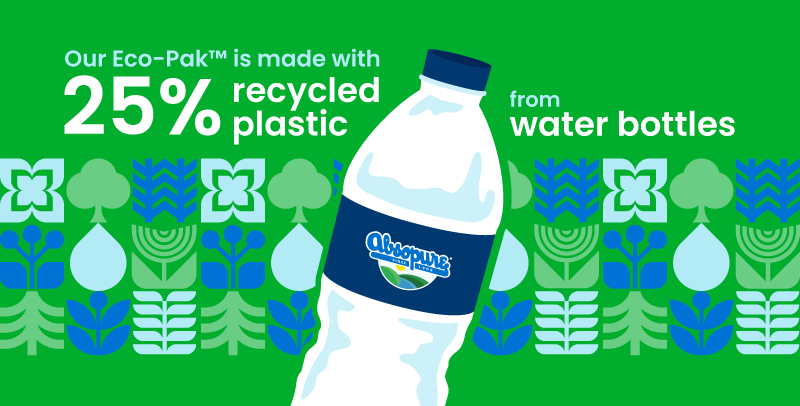
At Absopure, we think about recyclability before a single drop of water hits the bottle. Our Eco-Pak™ bottles are made with 25% recycled content from previously used bottles, a number that has more than doubled in recent years thanks to a technology breakthrough that allowed us to incorporate even more recycled material without compromising quality. The goal is to keep pushing that percentage higher as processing innovation advances.
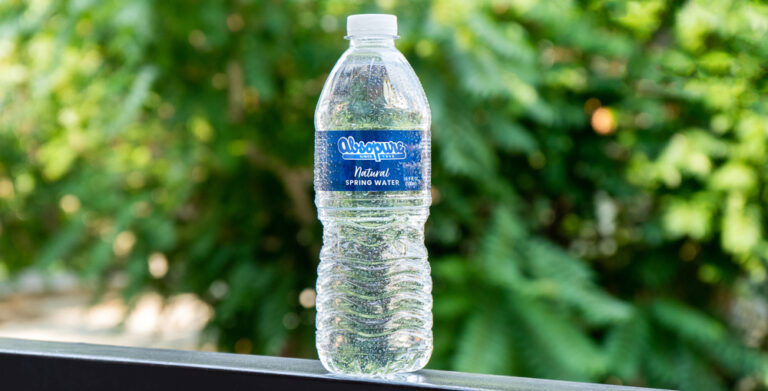
Beyond our Eco-Pak™, every single-serve Absopure bottle is 100% recyclable. That includes the cap, which you can now keep screwed on when you toss your bottle in the bin, since modern processing facilities can separate cap material from bottle material during the recycling process.
Our 3- and 5-gallon cooler bottles, once emptied, are picked back up, sanitized, refilled, and reused up to 30 times or more. When they’ve reached the end of their lifecycle, we recycle our refillable containers the same way we recycle our single-serve bottles.
Keep the Cycle Going
From production to recovery, every step in a closed-loop system matters, but participation at home is also important. The good news? Supporting the cycle should fit right into your existing recycling program. The steps are simple:
Leave the cap on. Loose caps can jam sorting equipment or slip through processing screens. Screwing the cap back on keeps everything together and headed to the right place.
Return your large cooler bottles. If you’re an Absopure Delivery customer, we’ll pick up your 3- and 5-gallon empties at no charge. Those bottles go right back into the system to be sanitized and refilled.
Find recycling drop-offs near you. Not everything goes curbside. Check your local municipality or community recycling resources for options in your area.
The bottled water industry has made real strides in recent years, with lighter-weight bottles that use less plastic, including more recycled content in bottles and expanded access to recycling programs across the country. However, it all starts with everyone ensuring bottles make it into the bin, not the trash.
More than 100 Years. Still Pushing Forward.
Absopure has been a Michigan family-owned company for over a century. That kind of staying power comes from caring about what we put out into the world, and what we take back.We’re proud of the system we’ve built: a recycling partnership that’s kept billions of bottles out of landfills, a product line that turns old plastic into new bottles, and a delivery model that makes doing the right thing as easy as leaving your empties by the front door.
But proud doesn’t mean finished. As recycling technology evolves, we’ll keep evolving with it. Because our goal was never to do enough. It’s to do more.